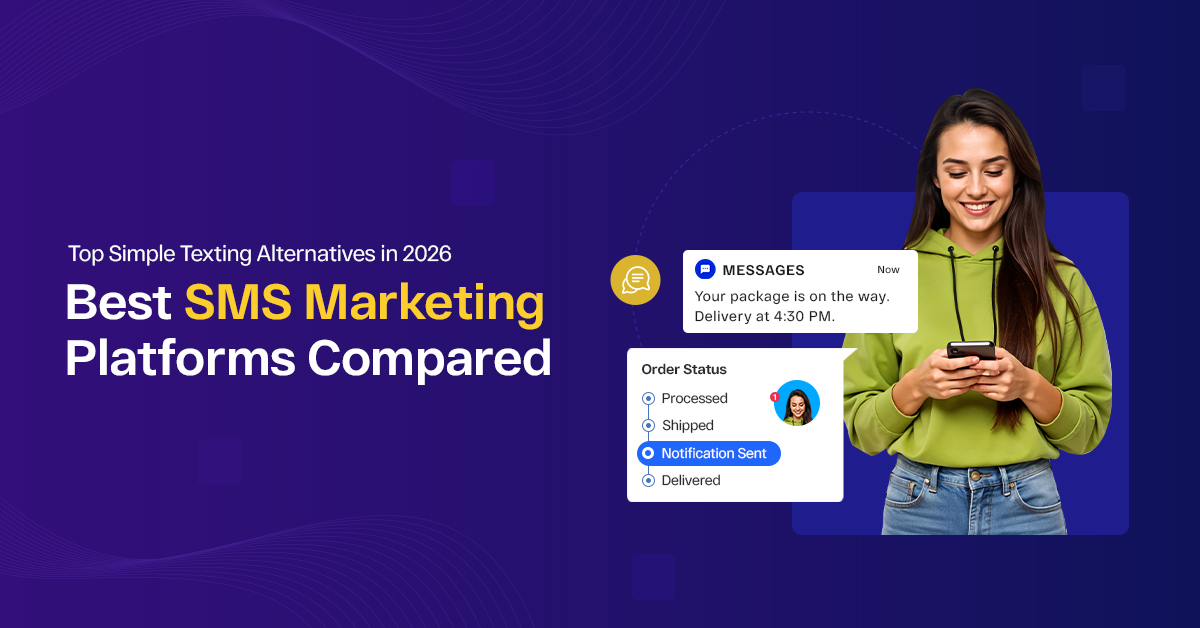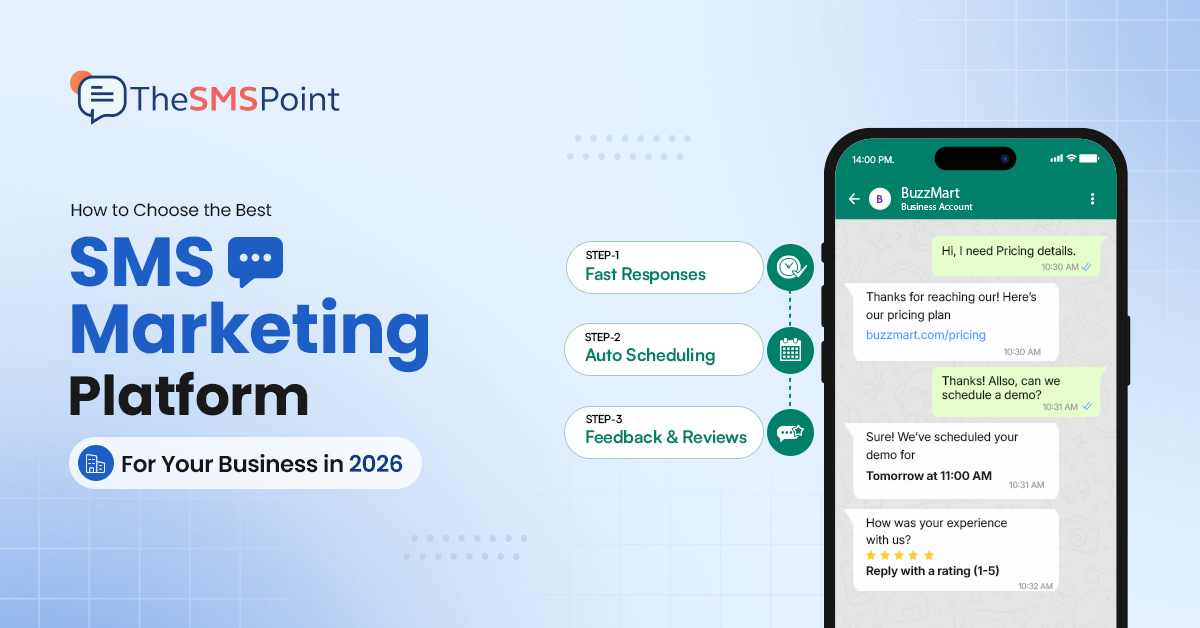
The best SMS marketing platform in 2026? Learn how to compare features, pricing, automation, integrations, and compliance tools to choose the right solution for your business.
As business communication becomes faster, more personalized, and more mobile-first, SMS marketing is no longer just an optional channel. It has become a practical tool for promotions, reminders, customer engagement, support, and retention. But with so many platforms offering different features, pricing models, and automation capabilities, choosing the right one can be difficult. In 2026, businesses need to look beyond basic bulk texting and evaluate SMS platforms based on workflow fit, scalability, integrations, compliance support, and long-term marketing value.
That is why more businesses are now comparing SMS marketing platforms more carefully instead of choosing a provider based only on low pricing or brand visibility. A modern SMS platform can affect how teams build subscriber lists, automate outreach, manage customer replies, connect with ecommerce or CRM systems, and measure results over time.
In this guide from NTSPL, we explain what an SMS marketing platform really is, why it matters in 2026, what features businesses should focus on, and how to choose the right solution based on real business needs.
What Is an SMS Marketing Platform?
An SMS marketing platform is a business messaging solution that helps companies send promotional texts, alerts, reminders, follow-up messages, and automated communication at scale. Unlike simple texting tools, a full SMS marketing platform usually includes list-building tools, automation workflows, segmentation, analytics, integrations, and compliance support.
A common misunderstanding is that every SMS platform works in the same way. In reality, different platforms are built for different goals. Some are better for ecommerce brands, some are more useful for customer support teams, some are designed for global messaging, and some are built for technical teams that need APIs and deeper customization.
That is why choosing the right SMS platform should depend on how your business communicates, not just on which software appears first in a list.
Why SMS Marketing Platforms Matter
Businesses today need communication channels that are immediate, visible, and easy for customers to engage with. Email remains important, but SMS has become one of the fastest ways to deliver timely information, promotional offers, reminders, and service-related communication.
A stronger SMS marketing platform helps businesses do more than send one-time messages. It supports automated workflows, subscriber growth, customer interaction, personalized messaging, internal coordination, and performance tracking. This makes SMS more valuable as part of a larger customer communication strategy.
In 2026, this matters even more because customers expect quick responses, consistent experiences, and mobile-friendly engagement. Businesses need tools that can support messaging across promotions, support, transactions, reminders, and retention campaigns without creating operational confusion.
SMS Marketing in 2026: What Businesses Should Expect
SMS marketing in 2026 is no longer limited to simple promotional blasts. Businesses now expect platforms to support automation, segmentation, CRM or ecommerce integrations, two-way messaging, analytics, and compliance support.
The category has also become more specialized. Some businesses need text-to-pay features. Others need omnichannel customer support. Some want advanced automation for abandoned carts or drip campaigns, while others want flexible pay-as-you-go pricing or developer APIs.
That means the best SMS platform is not the same for every company. The right choice depends on your use case, customer journey, message volume, team workflow, and technical needs.
What Features Should You Look for in an SMS Marketing Platform?
- Automation and Workflow Tools
Automation is one of the most important features in a serious SMS marketing platform. Businesses should be able to schedule campaigns, trigger messages based on customer actions, create drip sequences, and automate follow-ups without relying on manual sending every time.
This is especially important for ecommerce promotions, appointment reminders, lead nurturing, onboarding flows, and re-engagement campaigns.
- Two-Way Messaging
SMS should not be treated only as a broadcast channel. In many industries, customers reply with questions, confirmations, requests, or feedback. That is why two-way messaging is essential.
A better platform should make it easy to manage replies, support conversations, and team collaboration when multiple people handle customer communication.
- Subscriber Growth Tools
Before you can run a successful SMS strategy, you need a reliable way to grow your list. Good SMS platforms often include tools such as signup forms, popups, QR codes, short codes, keyword opt-ins, and landing-page integrations.
Without strong list-building capabilities, even the best campaign tools will have limited impact.
- Segmentation and Personalization
Not every subscriber should receive the same message. Strong segmentation features help businesses target customers based on behavior, location, interest, order history, engagement level, or lifecycle stage.
This improves message relevance and reduces the risk of over-messaging people with content that does not match their needs.
- Compliance Support
Compliance is critical in SMS marketing. Businesses need to manage consent properly, provide opt-out options, and maintain responsible messaging practices.
A good platform should make compliance easier by supporting opt-ins, unsubscribes, contact preferences, and safe campaign workflows. This is not just a legal consideration. It also protects brand trust.
- Integrations with Business Tools
SMS works best when it connects with your existing systems. Whether you use ecommerce platforms, CRM software, marketing automation tools, support systems, or analytics platforms, integration matters.
A disconnected SMS platform can create data silos and manual work. An integrated system helps teams trigger smarter campaigns, sync customer records, and improve targeting across channels.
- Reporting and Analytics
A business should be able to see what is working and what is not. Good SMS reporting helps teams understand subscriber growth, delivery performance, response rates, campaign engagement, and conversion patterns.
Without proper reporting, it becomes difficult to improve strategy, justify budget, or understand customer behavior.
Is the Cheapest SMS Platform Always the Best Choice?
Not necessarily. A low-cost platform may look attractive at first, but cheaper software often comes with limits in automation, segmentation, integration depth, support, or reporting.
For businesses with occasional messaging needs, simple or pay-as-you-go pricing can be a good fit. But for businesses planning to use SMS as a real marketing and customer engagement channel, value matters more than headline price. The better question is not just “Which platform is cheapest?” It is “Which platform fits our workflow, goals, and future growth?”
SMS Marketing Platforms vs Basic Texting Tools
Basic texting tools are usually built for sending simple messages. SMS marketing platforms are designed to support structured business communication.
That means they usually offer:
- automated campaigns
- list-building tools
- audience segmentation
- analytics
- integrations
- team collaboration
- compliance workflows
In other words, a basic tool helps you send texts. A true SMS marketing platform helps you build an ongoing communication system that supports marketing, support, and customer retention.
How to Choose the Best SMS Marketing Platform for Your Business
When comparing providers, businesses should avoid choosing only based on popularity or starting price. Instead, ask practical questions:
Does the platform support your main use case?
A platform built for ecommerce may not be the best option for support-heavy teams. A tool built for developers may not be ideal for non-technical marketers.
Can it scale with your communication needs?
Your messaging needs today may be smaller than what they will be in six months or a year. Choose a platform that can grow with your list size, workflow complexity, and campaign volume.
Does it integrate with your existing systems?
If the platform does not connect with your store, CRM, or marketing tools, your team may spend too much time doing manual work.
Are the automation tools strong enough?
If your business wants to run welcome flows, reminders, promotional sequences, or behavior-based messages, automation needs to be part of the platform from the beginning.
Is compliance built into the workflow?
The platform should help your team follow safer and more responsible messaging practices without needing manual workarounds.
Will the reporting actually help improve performance?
Analytics should go beyond message counts. The platform should give useful visibility into engagement, list performance, and customer interaction.
Important Note for Businesses
There is no single best SMS marketing platform for every business. What works for a retail brand may not work for a healthcare provider, restaurant, SaaS company, education business, or support-driven service team.
That is why businesses should approach platform selection based on their own communication model, customer expectations, industry requirements, and internal workflow. The right choice is the one that supports your goals clearly and sustainably.
In 2026, choosing the best SMS marketing platform is less about finding the most well-known provider and more about choosing the right communication system for your business. The best platform should help you grow your subscriber base, automate outreach, manage customer engagement, stay compliant, and connect messaging with your larger business tools.
For businesses planning to invest seriously in customer communication, the smart approach is to compare SMS platforms based on workflow fit, long-term value, integration strength, and operational simplicity. Price matters, but usability, flexibility, and business alignment matter more.
At NTSPL, we recommend choosing an SMS marketing platform as part of a broader digital communication strategy. The best results usually come when messaging, customer experience, and business systems work together.
FAQ:
1) What is the best SMS marketing platform for business in 2026?
The best SMS marketing platform depends on your business type, communication goals, customer journey, and required features. There is no single platform that is perfect for every company.
2) What features should an SMS marketing platform include?
The most important features usually include automation, two-way messaging, subscriber growth tools, segmentation, integrations, analytics, and compliance support.
3) Is SMS marketing better than email marketing?
SMS and email serve different purposes. SMS is stronger for urgent, direct, and high-visibility communication, while email is often better for longer content and broader campaign storytelling. Many businesses benefit from using both together.
4) Are SMS marketing platforms only for ecommerce brands?
No. SMS platforms are useful for many industries, including healthcare, education, hospitality, retail, service businesses, and support-driven organizations.
5) Should I choose a monthly subscription or pay-as-you-go SMS platform?
That depends on your message volume and business needs. Pay-as-you-go may work well for occasional usage, while subscription-based platforms are often better for businesses that need automation, segmentation, and ongoing campaign management.