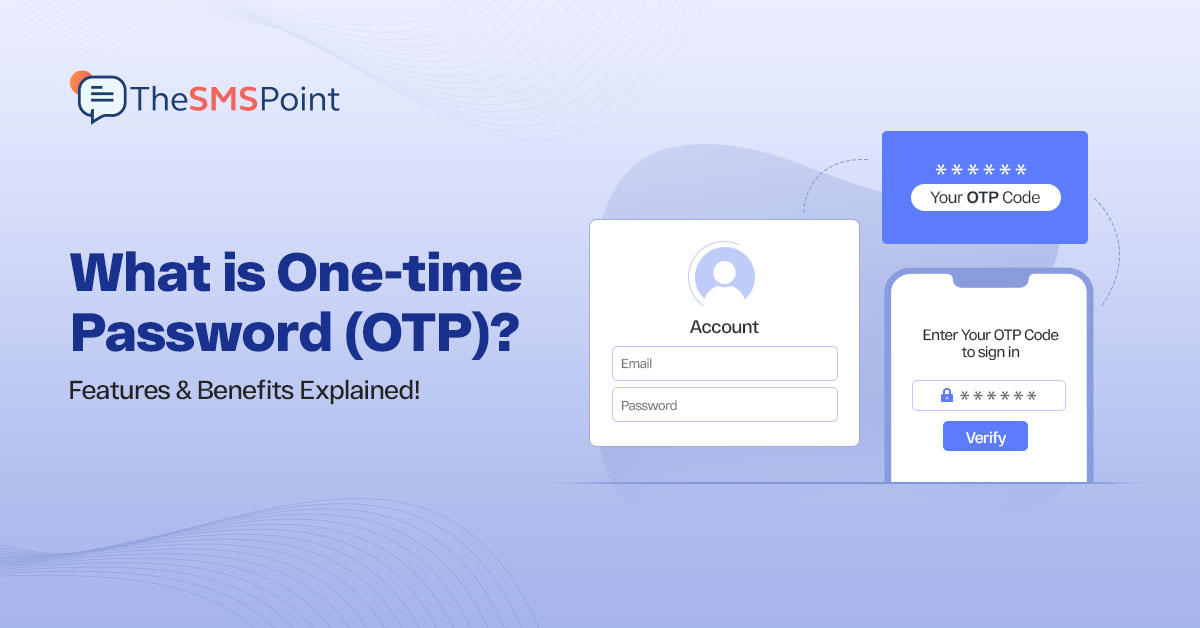
In 2026, digital security is no longer just about passwords, it’s about smart, adaptive, and layered authentication. One-Time Passwords (OTPs) remain a core part of this transformation, but their role is evolving rapidly with AI-driven threats, phishing attacks, and the rise of passwordless systems.
This blog explores everything you need to know about OTPs, from basics to future trends, and how businesses like NTSPL can leverage them for secure digital ecosystems.
What is a One-Time Password (OTP)?
A One-Time Password (OTP) is a unique, auto-generated code used for a single login session or transaction.
Unlike traditional passwords:
- OTPs are temporary
- They expire quickly
- They cannot be reused
Example: When you log into your bank account and receive a 6-digit code, that’s an OTP.
In 2026, OTPs are a key component of multi-factor authentication (MFA), adding an extra layer beyond usernames and passwords.
How Does a User Get a One-Time Password?
The OTP delivery process is simple and user-friendly:
- User enters login credentials
- System triggers OTP verification
- OTP is sent via:
- SMS
- Voice call
- Authenticator apps (like Google Authenticator)
- User enters OTP to verify identity
Most OTPs are delivered within seconds and are valid only for a short duration.
2026 Trend:
Businesses are shifting from SMS OTP to app-based and WhatsApp OTP delivery for better security and user experience.
How Does a One-Time Password Work?
Behind the scenes, OTPs are generated using secure algorithms:
Types of OTPs:
- HOTP (Event-Based) → Generated based on login attempts
- TOTP (Time-Based) → Generated based on time (usually 30–120 seconds validity)
Working Mechanism:
- Server + user device share a secret key
- Algorithm generates a unique code
- Code is validated in real-time
In simple terms:
OTP = Dynamic + Time-Sensitive + Single-Use Authentication Code
Are One-Time Passwords Secure in 2026?
Yes, but with conditions.
Why OTPs are secure:
- Single-use → cannot be reused
- Time-limited → reduces attack window
- Adds second layer → prevents unauthorized access
OTPs significantly reduce cybercrime risks when combined with 2FA.
Limitations (2026 Reality):
- SMS OTP can be vulnerable to SIM swap attacks
- Phishing attacks can trick users into sharing OTPs
- AI-based social engineering is rising
2026 Insight:
Organizations are moving toward phishing-resistant authentication (biometrics, passkeys) along with OTPs.
What Are the Benefits of OTPs?
- Stronger Security
OTP ensures even if passwords are stolen, accounts remain protected.
- Reduced Fraud
Helps prevent unauthorized transactions and identity theft
- No Password Dependency
Users don’t rely only on weak or reused passwords
- Easy User Experience
Simple verification via phone or app
- Compliance Ready
Supports GDPR, security policies, and enterprise standards
Endless OTP Use Cases & Examples
OTPs are everywhere in modern digital systems:
Banking & Finance
- Transaction verification
- Net banking login
E-commerce
- Order confirmation
- Payment authentication
Enterprise Systems
- Employee login
- VPN access
Healthcare
- Patient data access
- Appointment verification
Apps & Platforms
- Social media login
- Password reset
Any system requiring secure identity verification uses OTPs.
The Future of OTPs & Authentication (2026 and Beyond)
Authentication is evolving fast. OTPs are still important, but not enough alone.
Key Trends in 2026:
- Passwordless Authentication
- Biometrics (Face ID, fingerprint)
- Passkeys replacing passwords
- AI-Driven Security
- Risk-based authentication
- Behavior tracking
- Phishing-Resistant MFA
- Hardware keys (FIDO2, WebAuthn)
- Device-based authentication
- OTP + Smart Authentication
- Adaptive OTP (only when risk detected)
- Context-aware login
OTP is shifting from primary security → supporting layer in advanced authentication systems
Learn More About OTPs & Modern Authentication
If you’re building secure applications in 2026, OTP alone is not enough, you need a multi-layered identity strategy.
Recommended Approach:
- Combine OTP + MFA + biometrics
- Use authenticator apps instead of SMS
- Implement risk-based authentication
- Move towards passwordless systems
How NTSPL Helps You Build Secure Authentication Systems
At NTSPL, we help businesses implement:
- OTP-based authentication systems
- Multi-factor authentication (MFA)
- Secure login APIs
- Enterprise-grade identity solutions
Whether you’re building a portal, app, or enterprise system, we ensure security + scalability + user experience
Final Thoughts
OTPs are not outdated, they are evolving.
In 2026:
- OTP = Essential but not standalone
- Security = Layered + Intelligent + User-friendly
Businesses that adopt modern authentication strategies will reduce fraud, improve trust, and scale securely.